Accessibility
Every body can train if the class is built to meet them where they are.
Martial arts classes do adapt for people with limited mobility, sensory sensitivities, joint concerns, older bodies, and first-timer nerves. The question isn't whether a class can work for you—it's whether this particular school is ready to make those adaptations clear and actually offer them. We cover what to ask any school before you book, and what you can reasonably expect them to work with.
What to ask about when you call a school
Every school offers something different, so the best way to know what they can do is to ask directly. When you call or email, mention your specific situation and listen for how they respond. Here are the core areas worth asking about:
- Stance and position options. Can you learn standing, or do they also teach kneeling or seated forms? This matters if standing for long periods is difficult.
- Impact levels. Do they have low-impact classes with no jumping or kicking, or drills focused on forms and technique? Can you take a full-contact class and step back on the intense parts?
- Trial or observation. Can you watch a class before you commit, or attend a free first session? Seeing how the instructor teaches and how students adapt tells you a lot.
- Modifications during class. Will the instructor show you an easier version of a technique, or let you rest during cardio parts? Most good instructors do this automatically.

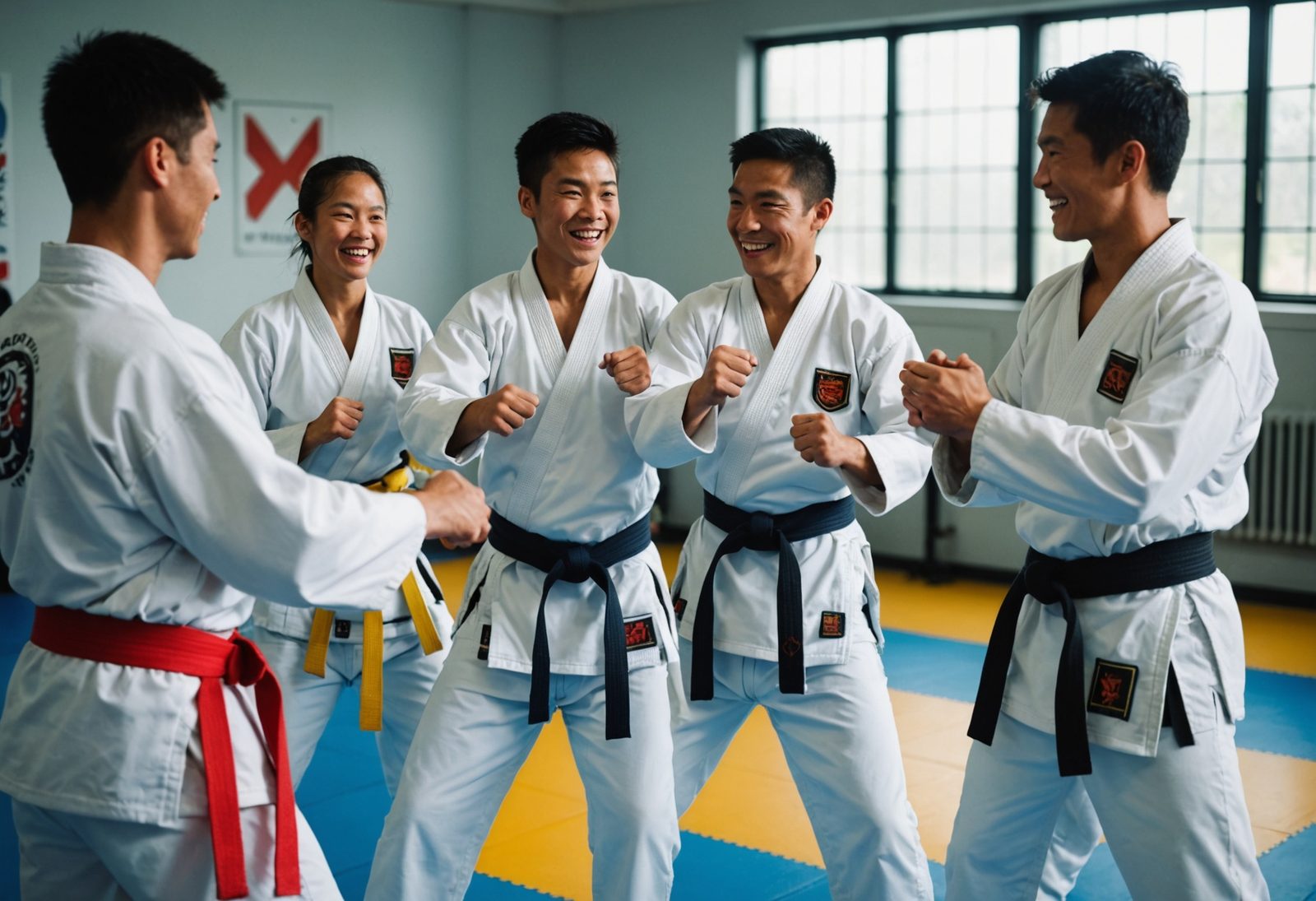
Three things to verify with any school
Ask about trial classes
Can you watch a class before joining, or attend a free trial? Seeing the space and instructor style firsthand tells you if they can actually adapt.
Mention your specific concern
Don't assume. Say plainly: "I have limited mobility in my knees" or "Loud noise is difficult for me." Good instructors will explain how they'd work around it.
Ask about equipment and props
Some schools have wall handles, balance bars, chairs for seated work, or modified pads. These exist partly to adapt classes.